17th October 2026 · 8 min
How Much Does It Cost to Build an App in the UK? A 2026 Guide
Published UK guides put a simple app at somewhere between £5,000 and £25,000, a business app with accounts, an admin panel and integrations at £25,000 to £120,000, and a regulated or enterprise app above that. The ranges are wide because an app is rarely one thing: it is the app, the service behind it, the store listings and the updates that follow. This guide sets out the published numbers, the rates behind them, what drives the price, and how to get a quote that holds.
Published UK ranges
| Source | Simple or MVP | Business app | Complex or regulated |
|---|---|---|---|
| Dotsquares, 2026 guide | £5,000 to £10,000 | £10,000 to £50,000 | £50,000 to £100,000 and up |
| Magora, updated 13 October 2026 | £10,000 to £25,000 (6 to 8 weeks) | £25,000 to £60,000 (3 to 6 months) | £80,000 to £120,000 (5 to 8 months) |
Both sources are agencies, so the bands describe what agencies quote rather than what every app costs. Both exclude VAT. Dotsquares also suggests setting aside 15 to 20 per cent of the build cost each year for maintenance, which matches the studio's experience: an app that is not updated for new operating-system releases stops working within a year or two.
The rates behind the numbers
An app price is time multiplied by a rate. ITJobsWatch, which tracks advertised UK contract rates, put the median day rate for a software engineer at £550 for the six months to 17 October 2026, with the middle half of rates between £460 and £669 and a median of £525 outside London. Agency rates include design, project management and testing on top of the developer, so a blended agency day is higher than a bare contractor day. Magora, for instance, quotes about £520 to £570 per developer-day including QA and product ownership.
That is why the same feature list can be priced so differently. Twenty developer-days at £550 is £11,000; the same work with design, testing and a project manager added is more; the same work offshore is less, with the trade-offs that come with it.
What moves the price
- One codebase or two. A cross-platform app in React Native and Expo ships to iOS and Android from one codebase. Two native apps are two builds and two sets of updates.
- The service behind the app. Accounts, data, sync and an admin dashboard are a web application in their own right, usually a larger piece of work than the screens.
- AI features. A camera or text feature backed by a language model needs an API, prompt work, evaluation and a budget for model usage after launch.
- Payments and subscriptions. A free tier and a paid tier mean store billing on both platforms, receipts and restore flows.
- Store accounts and review. Apple and Google each charge for a developer account and each review the app. Submission, rejection and resubmission are part of the launch, not an afterthought.
- Languages. Localisation is a configuration step when it is planned from the start and a rewrite when it is not.
- Updates. New iOS and Android versions every year, new device sizes, and the features users ask for once they have the app.
What an app build looks like in practice
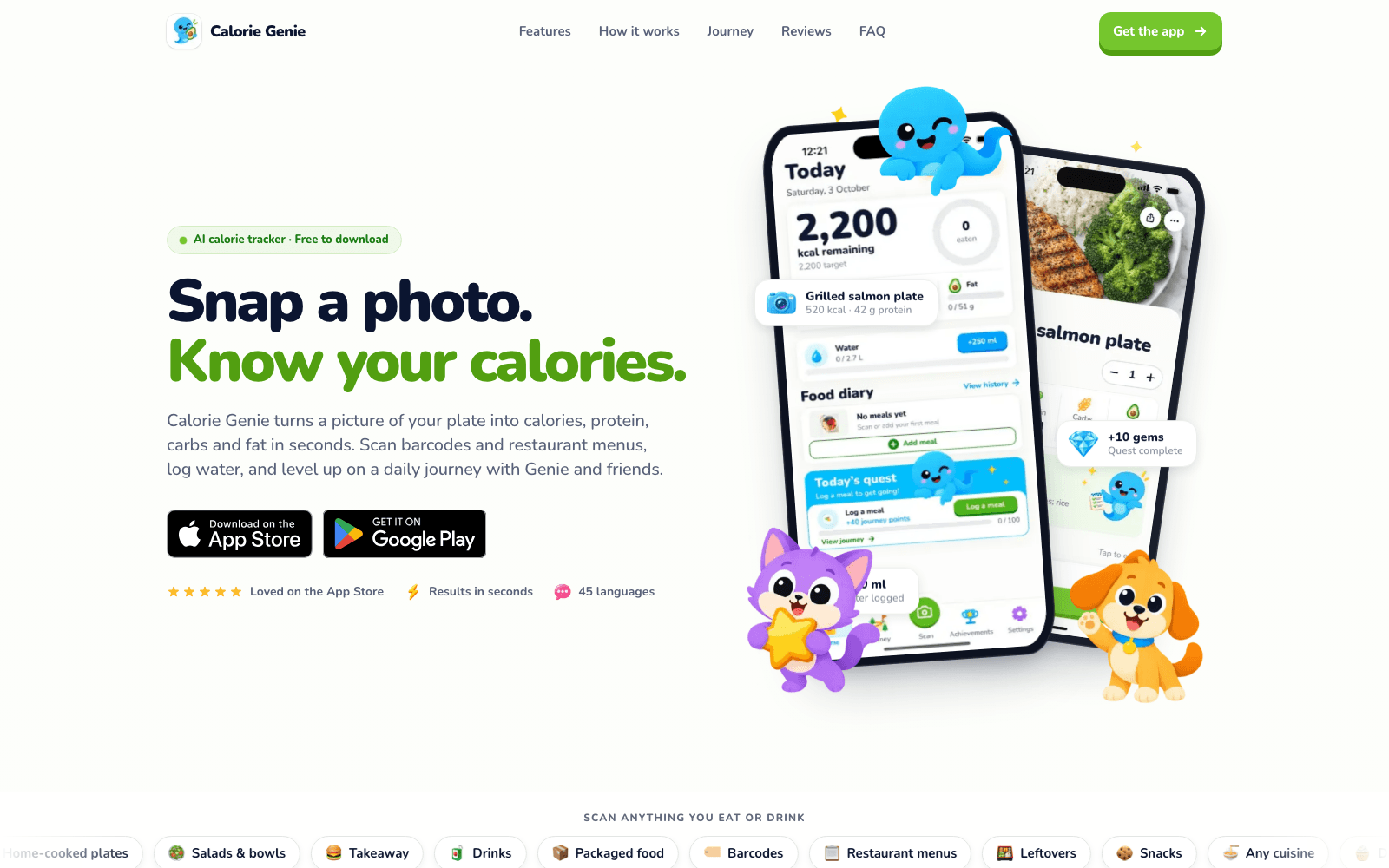
Calorie Genie is the studio's own app and a fair example of a full build. It is an AI calorie tracker for iOS and Android from one React Native and Expo codebase: a photo of a plate returns calories, protein, carbs and fat with a health score; it reads barcodes and nutrition labels, ranks the dishes on a restaurant menu against a daily goal, logs water and weigh-ins, and turns the routine into quests, badges and streaks. Behind it are an Express and PostgreSQL API, OpenAI models, store billing for a Premium tier, 45 languages and a Next.js marketing site. It was released on the App Store in June 2026 and is also on Google Play. The same team built every part, which is what the mobile app development service covers.
Ongoing costs
After release there are store fees, hosting for the API, model usage if the app has AI features, and the updates each operating-system release requires. The studio's published all-in-one retainer, £1,000 to £15,000 a month with a three-month minimum, covers maintenance, servers, deployments and further development; the right level depends on how often the app changes.
How to get a quote that holds
- List the screens and what each one does.
- List the device features the app needs: camera, notifications, location, offline use.
- Describe the service behind it: accounts, data, admin, integrations.
- State the business model: free, paid, subscription, in-app purchases.
- State the platforms and languages for the first release.
- Ask for the price excluding VAT, the assumptions, and what happens after launch.
A written specification turns that list into a fixed price. Project work at Digital Souls is quoted on that document; the standing packages are on the home page, and a question about an app costs nothing through the contact form.