17th October 2026 · 8 min
How Much Does Custom Software Development Cost in the UK? A 2026 Guide
Custom software is priced the same way everywhere: the time it takes, multiplied by the rate of the people doing it, plus what it costs to run afterwards. In the UK in 2026 the published rates and bands are easy to find; what is harder is knowing which band your project belongs in. This guide gives the numbers with their sources, explains what a specification does to the price, and shows what two real builds included.
Day rates in the UK
ITJobsWatch tracks advertised contract rates across UK job adverts. For a software engineer it reports a median day rate of £550 for the six months to 17 October 2026, down 9.8 per cent on the same period a year earlier, with the middle half of rates between £460 and £669. Outside London the median was £525. These are rates for one contractor; an agency day includes design, project management and testing around the developer, so agency rates run higher per person and lower per finished feature when the work is well specified.
For comparison, one London agency, Magora, publishes about £520 to £570 per developer-day including QA and product ownership (updated 13 October 2026), and lists market bands of £15 to £30 an hour for offshore freelancers up to £45 to £90 an hour for London product-engineering houses.
Published project bands
| Kind of build | Published band (ex VAT) | Typical duration |
|---|---|---|
| MVP: one or two core journeys | £10,000 to £25,000 | 6 to 8 weeks |
| Production app or web platform with back end and admin | £25,000 to £60,000 | 3 to 6 months |
| Regulated or integration-heavy product (fintech, health, logistics) | £80,000 to £120,000 | 5 to 8 months |
Source: Magora, updated 13 October 2026. Other UK agency guides give wider bands, with enterprise programmes at several hundred thousand pounds, and one app-focused guide suggests 15 to 20 per cent of the build cost each year for maintenance. The bands are what agencies quote, not laws of nature; the gap between the cheapest and dearest quote on the same brief is routinely several times over.
What a specification does to the price
The single biggest cost driver is not the technology but how much is unknown when the price is set. A supplier who prices an idea has to cover the risk that the idea grows; a supplier who prices a specification does not. At Digital Souls Studios every project starts with a written specification: the screens, the data model, the integrations, who uses the system and what each of them needs to do. Scope and price are agreed on that document before production, and the document records what is deliberately left out, so the next phase is already outlined.
Three decisions in that document move the price more than any other:
- First version or full platform. A first release limited to the core features costs a fraction of the platform and tells you whether the platform is worth building. See MVP development.
- Integrations. Each system the software must talk to is work to specify, build and test, and the one with the worst documentation sets the schedule.
- Who operates it. Admin screens, reporting, permissions and audit trails are the difference between software a team can run and software that needs the developer on call.
Two real builds
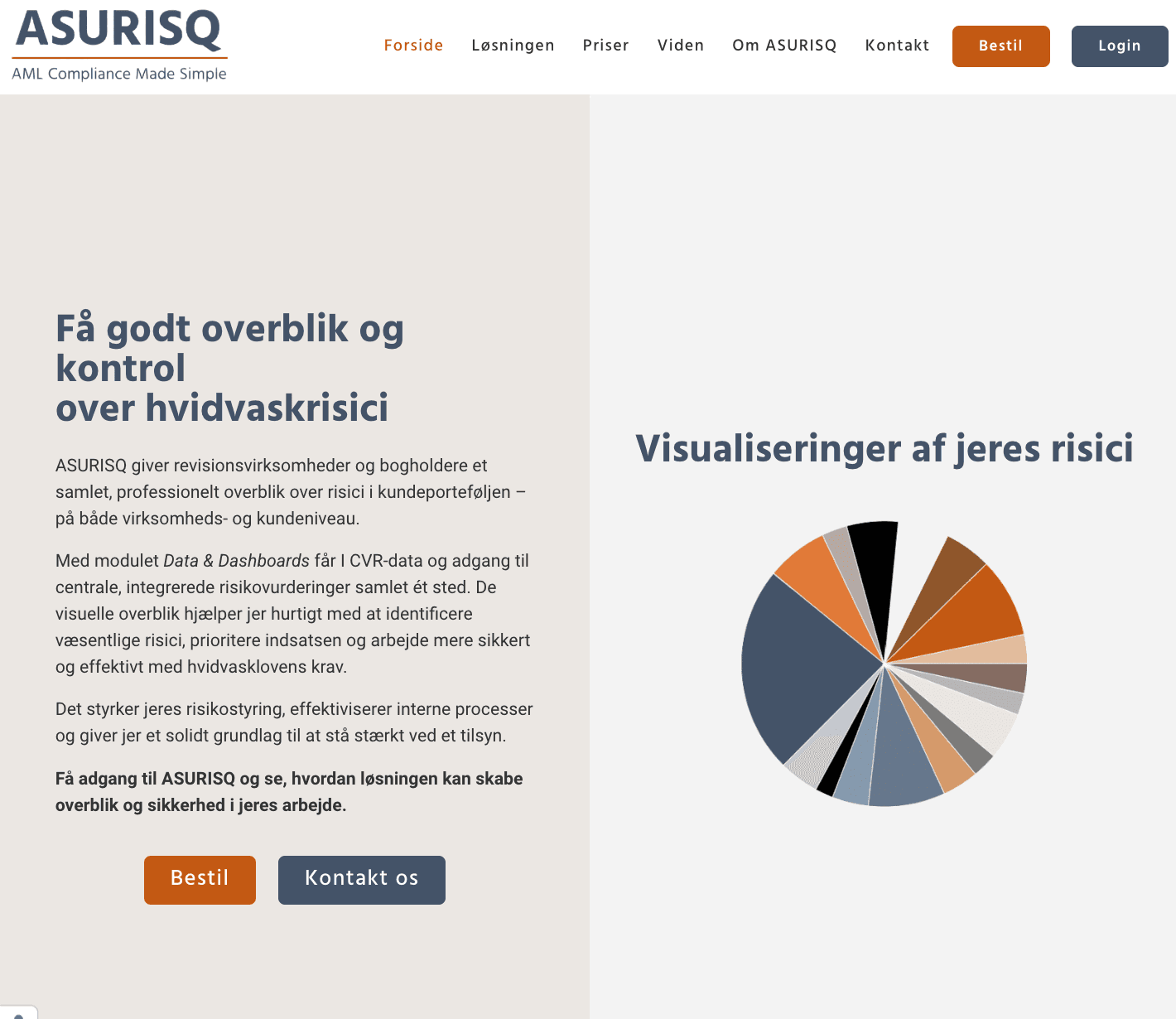
ASURISQis anti-money-laundering compliance software for financial institutions and regulated businesses, launched in December 2025 with ASURISQ ApS. It includes monitoring workflows and dashboards, risk analytics, structured case and alert handling, policy and threshold configuration, reporting views for governance and audit, and secure web access for distributed compliance teams, built in Next.js, React and Tailwind CSS. That is the "regulated, integration-heavy" row of the table above in practice.
Minday is an AI interview-training platform: simulated interviews, real-time feedback, personalised learning paths and progress tracking, built in React, Next.js, AWS, OpenAI and Three.js. The studio launched it on IT Jobbank in July 2024 and on Jobindex, Denmark's largest job portal, in August 2025. No client figures are published for either project; the feature lists are there to show what a quote of that kind covers. Both are the sort of work described under custom software development.
Ongoing costs
Software keeps costing money after launch: hosting, third-party services, security updates, and the changes a business asks for once it uses the system. The studio's published all-in-one retainer covers maintenance, servers, deployments, documentation, design and further development for £1,000 to £15,000 a month, with a three-month minimum. Fixed-price builds are published for the common AI cases, from £3,000 for a support agent to £3,000 to £10,000 for a custom agent, under AI and automation.
Getting a price that holds
- Write down the users and what each needs to do.
- List the screens, the data, and every system the software must connect to.
- Decide what is in the first version and what is deliberately out.
- Say who will operate the system after launch.
- Ask for the price excluding VAT with its assumptions, and for the ongoing cost separately.
Project work at Digital Souls is quoted in writing on that specification. The packages are on the home page; a question about a build costs nothing through the contact form, and we reply within 24 hours.